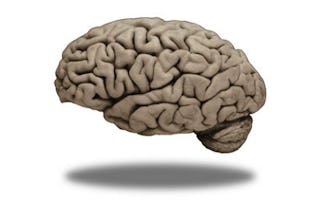
By regulating communication, sensory input, and control, the nervous system plays a pivotal role in how we take in information, both voluntarily and involuntarily. Human Neuroanatomy provides an introduction to the central and peripheral nervous systems.

Anatomy: Human Neuroanatomy
Labor Day starts with $70+ in savings on Coursera Plus. Save 40% for 3 months.

Anatomy: Human Neuroanatomy
This course is part of Anatomy Specialization

Instructor: Kelli Sullivan
60,358 already enrolled
Included with Learn more
Gain insight into a topic and learn the fundamentals.
1,018 reviews
Beginner level
No prior experience required
Flexible schedule
2 weeks at 10 hours a week
Learn at your own pace
What you'll learn
Identify the components of the central and peripheral nervous systems.
Describe how sensory information reaches the brain and how motor commands are relayed to the muscles.
Understand the connections among components of the nervous system.
Skills you'll gain
Details to know

Shareable certificate
Add to your LinkedIn profile
Assessments
21 assignments
Taught in English
97%
Most learners liked this course
See how employees at top companies are mastering in-demand skills

Build your subject-matter expertise
This course is part of the Anatomy Specialization
When you enroll in this course, you'll also be enrolled in this Specialization.
- Learn new concepts from industry experts
- Gain a foundational understanding of a subject or tool
- Develop job-relevant skills with hands-on projects
- Earn a shareable career certificate

There are 8 modules in this course
Earn a career certificate
Add this credential to your LinkedIn profile, resume, or CV. Share it on social media and in your performance review.
Instructor
Instructor ratings
(270 ratings)Offered by

Explore more from Basic Science
Yale University
Rice University
Duke University
University of Michigan
Why people choose Coursera for their career

Felipe M.
Learner since 2018
"To be able to take courses at my own pace and rhythm has been an amazing experience. I can learn whenever it fits my schedule and mood."

Jennifer J.
Learner since 2020
"I directly applied the concepts and skills I learned from my courses to an exciting new project at work."

Larry W.
Learner since 2021
"When I need courses on topics that my university doesn't offer, Coursera is one of the best places to go."

Chaitanya A.
"Learning isn't just about being better at your job: it's so much more than that. Coursera allows me to learn without limits."
Learner reviews
- 5 stars
89.98%
- 4 stars
8.05%
- 3 stars
1.17%
- 2 stars
0.09%
- 1 star
0.68%
Showing 3 of 1018
IS
Reviewed on Oct 31, 2020
I learned a lot and I think that I gained long term knowledge! The professor Kelli Sullivan is an amazing teacher and all her lectures are very interesting! Thank you!
CJ
Reviewed on Oct 13, 2020
The material in this course was well put together. The different groupings and categories made it much easier to remember the information.
IM
Reviewed on Jan 26, 2021
Dr. Kelli Sullivan was a wonderful instructor and did a great job at breaking down very complex neuroanatomy concepts and terminology!