Criminology Courses
Criminology courses can help you learn criminal behavior analysis, the justice system's structure, crime prevention strategies, and the impact of social factors on crime. You can build skills in critical thinking, data analysis, and effective communication with law enforcement and community organizations. Many courses introduce tools like statistical software for crime data analysis and case management systems that help in understanding crime patterns and developing intervention strategies.
Popular Criminology Courses and Certifications

Nanyang Technological University, Singapore
Skills you'll gain: Criminal Investigation and Forensics, Chemistry, Investigation, Biochemistry, Laboratory Testing, Laboratory Research, Pharmacology, Science and Research, Laboratory Procedures, Molecular Biology

Vanderbilt University
Skills you'll gain: Criminal Investigation and Forensics, Public Safety and National Security, Social Justice, Legal Proceedings, Jury Trial, Political Sciences, Case Law, Neurology, Social Sciences, Policy Analysis, Appeals, Litigation and Civil Justice, Disabilities, Mental and Behavioral Health Specialties, Sociology, Mental Health Diseases and Disorders, Law, Regulation, and Compliance, Cultural Diversity, Investigation, Intelligence Collection and Analysis
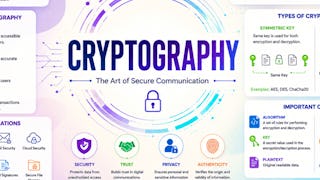
Birla Institute of Technology & Science, Pilani
Skills you'll gain: Public Key Infrastructure, Cryptography, Public Key Cryptography Standards (PKCS), Cryptographic Protocols, Encryption, Authentications, Data Encryption Standard, Advanced Encryption Standard (AES), Key Management, Network Protocols, Email Security, Cybersecurity, Network Security, Security Software, Data Integrity, Multi-Factor Authentication, Firewall

University of Cambridge
Skills you'll gain: Criminal Investigation and Forensics, Bioinformatics, Molecular Biology, Healthcare Ethics, Specimen Collection, Scientific Methods, Molecular, Cellular, and Microbiology, Biostatistics, Life Sciences, Laboratory Techniques, General Science and Research, Analytical Testing, Research, Biology
Emory University
Skills you'll gain: Injury Prevention, Public Health and Disease Prevention, Substance Abuse, Public Health, International Relations, Diplomacy, Cultural Diversity, Mental Health, Sociology, Mental and Behavioral Health, Social Sciences, Economics, Policy, and Social Studies, Media and Communications, Community Health, Trauma Care, Child Welfare, Mental Health Diseases and Disorders

Wesleyan University
Skills you'll gain: Social Sciences, Psychology, Persuasive Communication, Social Studies, Sociology, Social Justice, Empathy & Emotional Intelligence, Behavior Management, Conflict Management, Research, Diversity Awareness, Research Methodologies, Decision Intelligence, Experimentation
What brings you to Coursera today?

Case Western Reserve University
Skills you'll gain: Trial Preparation, Court Systems, Legal Proceedings, Legal Hearings, International Relations, Legal Strategy, Diplomacy, Law, Regulation, and Compliance, Public Safety and National Security, Legal Writing, Interactive Learning, Case Studies, Student Engagement

Wesleyan University
Skills you'll gain: Motivational Interviewing, Psychological Evaluations, Cognitive Behavioral Therapy, Mental Health Diseases and Disorders, Mental Health Therapies, Behavioral Health, Mental and Behavioral Health, Psychiatry, Psychotherapy, Clinical Psychology, Behavior Management, Psychosocial Assessments, Cultural Responsiveness, Mental Health, Diversity Awareness, Behavioral Management, Health Promotion, Psychology, Experimentation, Goal Setting

Macquarie University
Skills you'll gain: Criminal Investigation and Forensics, Investigation, Cybersecurity, Data Security, Cyber Governance, Cyber Security Policies, Computer Security, Digital Assets, Security Testing, Data Analysis Software, Cyber Risk, Incident Management

University of Amsterdam
Skills you'll gain: Qualitative Research, Scientific Methods, Statistical Analysis, Statistical Hypothesis Testing, Research, Science and Research, Research Design, Sampling (Statistics), Research Reports, Interviewing Skills, Data Analysis, Data Collection, Research Methodologies, Probability & Statistics, Social Sciences, Statistical Methods, Regression Analysis, Statistical Inference, Statistics, R Programming

Macquarie University
Skills you'll gain: Mobile Security, Digital Forensics, Criminal Investigation and Forensics, Cyber Threat Intelligence, Cyber Security Strategy, Investigation, Intrusion Detection and Prevention, Cyber Attacks, Cybersecurity, Mobile Development, Model Training, Cyber Security Policies, Artificial Intelligence and Machine Learning (AI/ML), Threat Modeling, Data Security, Cyber Governance, Endpoint Security, Machine Learning Methods, iOS Development, Application Security

University of Maryland, College Park
Skills you'll gain: Cryptography, Encryption, Cryptographic Protocols, Key Management, Cybersecurity, Communication Systems, Digital Communications, Authentications, Data Integrity, Algorithms
In summary, here are 10 of our most popular criminology courses
- Introduction to Forensic Science: Nanyang Technological University, Singapore
- Hot Topics in Criminal Justice: Vanderbilt University
- Cryptography: Birla Institute of Technology & Science, Pilani
- Forensic Science: DNA Analysis: University of Cambridge
- Understanding Violence: Emory University
- Social Psychology: Wesleyan University
- Introduction to International Criminal Law: Case Western Reserve University
- Abnormal Psychology: Wesleyan University
- Cyber Security: Digital Forensics: Macquarie University
- Methods and Statistics in Social Sciences: University of Amsterdam










