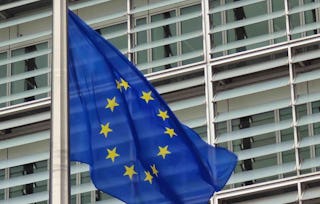
All citizens in the EU are granted a European Citizenship on top of their national citizenship. Which rights and opportunities does this supra- and transnational citizenship provide? And what are the challenges and dilemmas of the two-level citizenship – for individuals, for the member states and for the union? This course examines the development, the scope and the challenges of European Citizenship.
The course has a threefold aim: to explore the development, application and current challenges of European citizenship. This aim is examined through three modules. The first module focuses on the development of European Citizenship: What are the substantive rights of citizenship beyond the state, and which institutions have been key to their development? Here, we focus on free movement for persons, cross-border welfare, and political rights – especially the European Citizens' Initiative. The second module focuses on the application of EU citizenship: How is EU citizenship practised? Is EU citizenship limited or extensive when compared to the US federal system, for example? Is it still foremost a right for those who move from member state to member state, but not for those who stay in their member state of origin? Finally, the third module examines the extent to which the rules and rights around European citizenship have been contested and politicized during the last decade. In this part of the course, we also look into the de-Europeanisation of citizenship through Brexit.
The course is funded by Erasmus+ and developed by the 4EU+ University Alliance, consisting of six European Universities: Univerzita Karlova, Universität Heidelberg, Sorbonne Université, Københavns Universitet, Università degli studi di Milano, Uniwersytet Warszawski.
Although European citizenship was established with the Treaty of Maastricht, which entered into force in 1993, its development and reasoning originate back to the Treaty of Rome in 1958 with free movement for workers and the historically more limited right to cross-border welfare. Since its establishment, the substantive rights of European citizenship have grown, not least through the Court of Justice of the European Union as an important institutional entrepreneur. In this lecture, the development and current status of European Citizenship will be explored by discussing core rights such as equal treatment, free movement, cross-border welfare, and political rights in terms of the European Citizens’ Initiative.
1.1 A Brief Introduction to European Citizenship•6 minutes
1.2 Development and Status•10 minutes
1.3 Union Citizenship and the European Court of Justice - a Tender Relationship•13 minutes
1.4 Free Movement and Cross-border Welfare•13 minutes
1.5 Political Rights and European Citizens' Initiative•11 minutes
6 readings•Total 65 minutes
EU Citizenship: Still a Fundamental Status? •20 minutes
1.2 Further reading •0 minutes
EU Citizenship Needs a Stronger Social Dimension and Soft Duties•25 minutes
1.4 Further Reading•0 minutes
Constructing Policy Narratives for Transnational Mobilization: Insights from ECI•20 minutes
1.5 Further Reading•0 minutes
5 assignments•Total 45 minutes
1.1•9 minutes
1.2•9 minutes
1.3•9 minutes
1.4•9 minutes
1.5•9 minutes
1 discussion prompt•Total 20 minutes
Your view on EU Citizenship•20 minutes
EU Citizenship for 'Movers' and 'Stayers'
Module 2•4 hours to complete
Module details
This second module further explores the scope of European citizenship, but adds the limits that materialize when rules and rights are applied in practice. We will look into pension, healthcare and family benefits, youth social integration and protection rights beyond the EU territory, as well as the challenges that might arise due to the inherent multilingualism and multiculturalism of the European Union. This module will seek answers to pertinent questions such as: Is European citizenship unequal in practice? Why is an issue, such as the exportability of family benefits, highly politicized in some member states? How do rights extend beyond the EU territory? What are the more recent developments of European citizenship and does that do away with the critique that European citizenship is a privilege for those on the move, but a rather hollow right for those who stay? Overall, this module aims to understand European Citizenship in context.
What's included
5 videos11 readings5 assignments
Show info about module content
5 videos•Total 62 minutes
2.1 Equality in EU Citizenship? - Pensioners and Healthcare•17 minutes
2.2 The High Politics of Family Benefits Across Borders•11 minutes
2.3 The Youth Guarantee•14 minutes
2.4 Multilingualism- United in Diversity•9 minutes
2.5 Rights to Protection Beyond the EU Territory•11 minutes
11 readings•Total 138 minutes
2.1 Free Movement and Equal Treatment in an Unequal Union•20 minutes
2.1 Further Reading•0 minutes
Free Movement of Workers Under Challenge: The Indexation of Family Benefits•25 minutes
Youth Unemployment- Have EU Policies Made a difference? •40 minutes
Increasingly Unequal? •5 minutes
2.3 Further Reading•0 minutes
Legal Communication and Translation Standards in the EU Internal Market•8 minutes
Legal education of Court interpreters and sworn translators•20 minutes
2.4 Further Reading•0 minutes
Diplomatic and Consular Protection in EU Law•20 minutes
2.5 Further Reading•0 minutes
5 assignments•Total 45 minutes
2.1•9 minutes
2.2•9 minutes
2.3 Quiz •9 minutes
2.4•9 minutes
2.5•9 minutes
Challenges to European Citizenship
Module 3•3 hours to complete
Module details
The third module turns to the challenges of European citizenship. We will present the two sides of the theoretical debate on whether it makes sense to use the concept of citizenship beyond the borders of the nation state. The theoretical critique will first be presented and then responded to. In addition, we will examine welfare chauvinism as a current political challenge to European citizenship. Finally, the lecture turns to de-Europeanisation of citizenship as a result of Brexit. While the process of de-Europeanisation takes away concrete rights for UK citizens in the Union and for EU citizens in the United Kingdom, the process of de-institutionalization also showcases the substantive scope of a key EU institution, matured through gradual steps of integration.
The University of Copenhagen is the oldest University in Denmark; founded in 1479, and with over 38,000 students and more than 9,000 employees. The purpose of the University is to conduct research and provide education to the highest academic level. Based in Denmark's capital city it is one of the top research institutions in Europe.
Established in 1816, the University of Warsaw is the largest university in Poland and a highly recognized research centre in the country. Its academic community comprises 7,600 employees, more than 40,000 undergraduate and graduate students and over 2,400 doctoral candidates. Besides 24 faculties, UW has also 30 academic and research centres. A wide range of studies in humanities, social, exact as well as natural sciences, including 24 programmes with English as a language of instruction, is provided by UW.
Established in 1924, the University of Milan (UNIMI) is a public teaching and research-intensive university marked by a wide variety of disciplinary fields. With over 60.000 students enrolled in 124 Bachelor and Master degree programmes, 9 Single-cycle programmes and 33 Doctoral Schools, it is the largest university in Lombardia, one of the most dynamic and internationally-oriented EU regions. The university is also a leading institution in Italy and Europe for scientific productivity.
Established in 1386, Heidelberg University is Germany’s oldest university and one of Europe’s most research-intensive institutions. Its successes in the Excellence Competitions of the German federal and state governments and in internationally recognised rankings substantiate the leading role of Heidelberg University in the academic, scientific and research landscape. The university is committed to advancing exceptional individual disciplines, promoting dialogue beyond traditional disciplinary boundaries, and turning research findings to good use for society and the economy. In this endeavour, it also relies on strong partners outside the university.
Sorbonne University is a multidisciplinary, research-intensive, world-class university. Located in the heart of Paris, with a regional presence, it is committed to the success of its students and to meeting the scientific challenges of the 21st century. In 2020, the University had 52,000 students and 800 PhD graduates. With 53 bachelors, 196 Master and 19 bi-disciplinary study programmes Sorbonne University covers a comprehensive range of subjects in the field of arts, humanities, social sciences, natural sciences, engineering and medicine.
Charles University was founded in 1348, which makes it the oldest university in the Czech Republic one of the oldest universities in Europe. Nearly 50,000 students and doctoral candidates are currently enrolled in a total of 300 degree programmes. The University comprises a total of seventeen faculties, of which five are medical, three are theological, six are faculties of the humanities and social sciences, and three are dedicated to the sciences. The main seat of the University is in Prague, with other campuses in Pilsen and in Hradec Kralove.
4EU+ Alliance brings together six large, comprehensive, public European research universities with the aim to create a new, shared quality of cooperation in teaching, education, research and administration. The cooperation is based on a common understanding of the European university idea, building on academic freedom and autonomy and ensuring fair participation in education. 4EU+ develops a common challenge-based framework for education by designing flexible learning pathways and ensuring university graduates gain competencies combining critical thinking, data literacy, multilingualism, entrepreneurship and a strong societal engagement.
"To be able to take courses at my own pace and rhythm has been an amazing experience. I can learn whenever it fits my schedule and mood."
Jennifer J.
Learner since 2020
"I directly applied the concepts and skills I learned from my courses to an exciting new project at work."
Larry W.
Learner since 2021
"When I need courses on topics that my university doesn't offer, Coursera is one of the best places to go."
Chaitanya A.
"Learning isn't just about being better at your job: it's so much more than that. Coursera allows me to learn without limits."
Learner reviews
4.8
69 reviews
5 stars
84.05%
4 stars
13.04%
3 stars
2.89%
2 stars
0%
1 star
0%
Showing 3 of 69
A
AL
4·
Reviewed on Nov 19, 2024
I have always been interested in Europe, and this course made me realize, more about what Europe is like.
C
CN
4·
Reviewed on Sep 7, 2025
Good course. Pace was right. The content was solid, but obviously a structured course like that will struggle to keep up with the latest EU developments.
P
PP
5·
Reviewed on Feb 21, 2023
it's one of the best courses I have ever seen in my life
When will I have access to the lectures and assignments?
To access the course materials, assignments and to earn a Certificate, you will need to purchase the Certificate experience when you enroll in a course. You can try a Free Trial instead, or apply for Financial Aid. The course may offer 'Full Course, No Certificate' instead. This option lets you see all course materials, submit required assessments, and get a final grade. This also means that you will not be able to purchase a Certificate experience.
What will I get if I purchase the Certificate?
When you purchase a Certificate you get access to all course materials, including graded assignments. Upon completing the course, your electronic Certificate will be added to your Accomplishments page - from there, you can print your Certificate or add it to your LinkedIn profile.
Is financial aid available?
Yes. In select learning programs, you can apply for financial aid or a scholarship if you can’t afford the enrollment fee. If fin aid or scholarship is available for your learning program selection, you’ll find a link to apply on the description page.